
Estimate useful compressor heat, avoided heating energy, net annual savings, and optional simple payback using inputs from equipment records and utility bills.
Table of contents
How to use our Compressed Air Heat Recovery Savings Calculator
- Choose Compressor power source. Use Rated motor power and Average load while running from equipment records, or use Measured average compressor input from a controller or power meter.
- Enter Loaded compressor time and Loaded hours with useful heat demand. The useful-demand hours must be no greater than loaded compressor time.
- Choose Heating energy being replaced, then copy its variable bill rate into Usage-based heating energy price. Enter the Existing heating equipment efficiency.
- Click Calculate. Check that the avoided energy units match your bill unit and that recovered heat is based on realistic overlap hours.
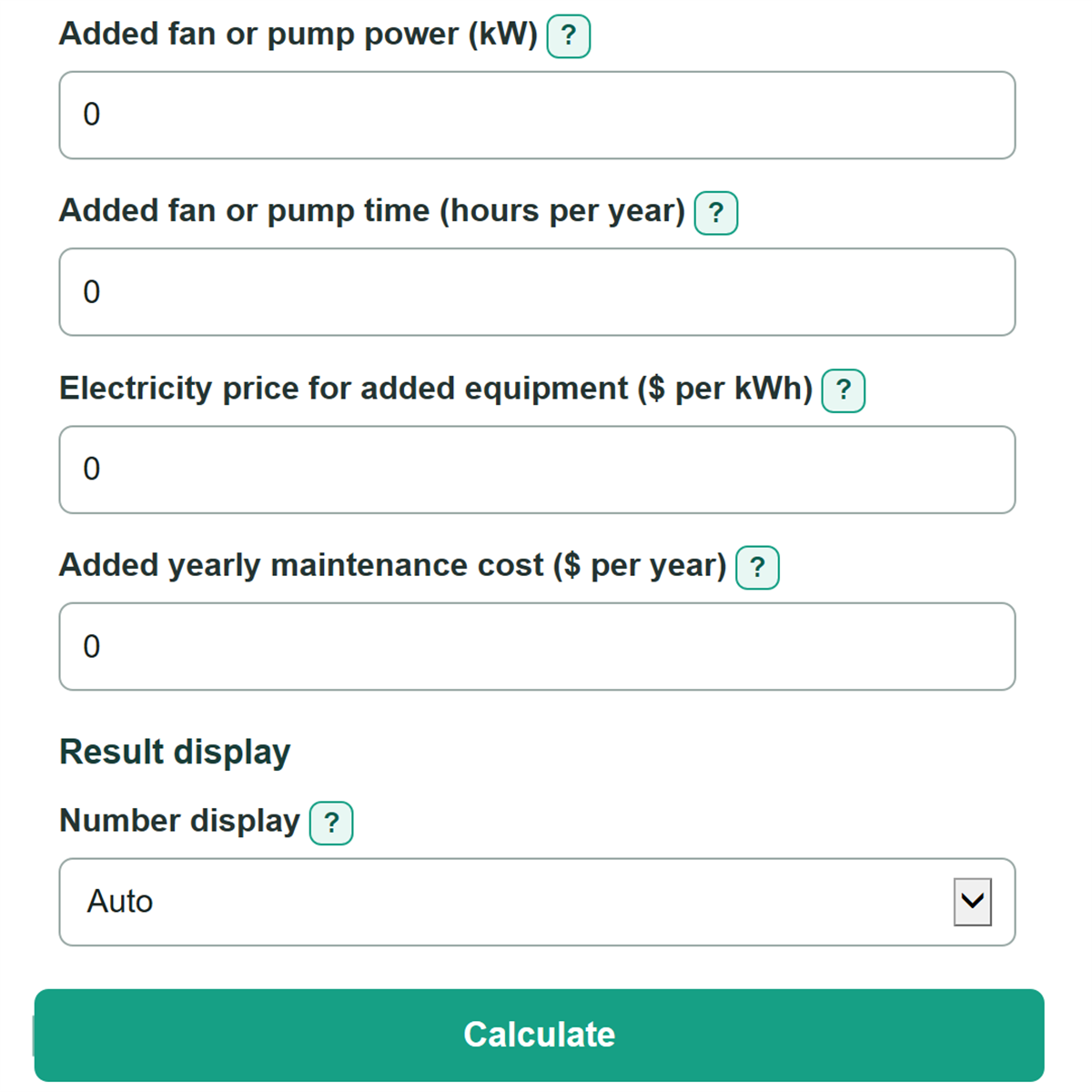
- Open Advanced options to revise Recoverable compressor heat (percent) or add project cost, fan or pump power, maintenance, and electricity cost for net savings and simple payback.
Definitions
Rated motor power: The motor nameplate rating in horsepower (HP). It is used with average load for a screening estimate.
Measured average compressor input: Average electrical power in kilowatts (kW) measured while the compressor is loaded. It replaces the HP-based estimate.
Loaded compressor time: Annual hours when the compressor is producing compressed air under load, rather than simply being switched on.
Loaded hours with useful heat demand: Annual overlap hours when the compressor is loaded and a building or process can accept the recovered heat.
Recoverable compressor heat: The share of compressor input that reaches a useful heat stream. The editable 80% planning value is used with a separate 85% existing-heater efficiency planning value in a DOE sourcebook example. [1]
MMBtu: One million British thermal units, a common US unit for large amounts of heat. One MMBtu equals 10 therms.
Simple project payback: Installed project cost divided by positive net annual savings. It is expressed in years.
Common mistakes and quick fixes
Mistake: Using total powered-on time for Loaded compressor time.
Fix: Use loaded hours from the controller when possible. Unloaded running time does not produce the same recoverable heat estimate.
Mistake: Entering Loaded hours with useful heat demand higher than Loaded compressor time.
Fix: Enter only the hours when both the compressor is loaded and the building or process can use heat.
Mistake: Treating Rated motor power as a meter reading.
Fix: Use Measured average compressor input if you have it. Otherwise, use rated HP with a realistic Average load while running.
Mistake: Including fixed monthly charges in Usage-based heating energy price.
Fix: Enter only charges that fall when fuel or electricity use falls. Fixed customer charges usually stay the same.
Mistake: Mixing up Recoverable compressor heat (percent) and Existing heating equipment efficiency.
Fix: Keep both values separate. The first is heat captured from the compressor; the second is fuel input avoided at the existing heater.
Mistake: Assuming Net annual heat-recovery savings is the same as gross fuel savings.
Fix: Add Added fan or pump power (kW), Electricity price for added equipment ($ per kWh), and Added yearly maintenance cost ($ per year) when the project creates recurring costs.
Limitations & Key Assumptions / Boundary Conditions
- This is a first-pass annual energy estimate, not a heat-exchanger, ductwork, piping, controls, or temperature design.
- The estimate assumes recovered heat can be delivered and used during every entered Loaded hours with useful heat demand. It does not test heat-sink capacity or seasonal temperature limits.
- Rated HP with average load estimates compressor input. Measured average input kW is usually the better basis when reliable meter or controller data is available.
- The result uses one displaced heating source and one usage-dependent price. Fixed customer charges, cooling-side benefits, demand charges, taxes, incentives, financing, and future price changes are excluded.
- Simple project payback appears only for a positive installed cost and positive net annual savings. It does not measure return on investment or lifecycle cost.
- Default recovery and heater-efficiency values are editable planning assumptions. Replace them with a supplier study, equipment record, or measured facility value before making a project decision.
Methodology
Calculation method
The calculator uses either the HP path or the measured-kW path, never both. In the HP path, rated motor power is converted to kW and adjusted by average load.
effective input (kW) = rated motor power (HP) x 0.745699872 x average load / 100
effective input (kW) = measured average compressor input (kW)
Useful operating time is the overlap of compressor loading and usable heat demand. Validation stops the calculation if entered demand hours exceed loaded compressor time.
overlap hours = minimum(loaded compressor time, loaded hours with useful heat demand)
Recovered heat is the estimated compressor input during overlap hours multiplied by the recoverable-heat percentage.
useful recovered heat (kWh thermal) = effective input x overlap hours x recoverable compressor heat / 100
useful recovered heat (MMBtu) = useful recovered heat (kWh thermal) x 0.003412141633
Purchased heating energy avoided is higher than delivered recovered heat when the existing heater is less than 100% efficient.
purchased heating energy avoided (MMBtu) = useful recovered heat (MMBtu) / (existing heating equipment efficiency / 100)
The calculator converts avoided MMBtu into the selected bill unit: 10 therms per MMBtu for natural gas, or gallons and kWh using the listed fuel-energy conversions. Gross savings use the entered variable energy price.
gross annual heating-cost savings = heating energy units avoided x usage-based heating energy price
Added electricity and maintenance reduce gross savings. Installed cost is not treated as an annual cost.
added annual operating cost = added fan or pump power x added fan or pump time x electricity price for added equipment + added yearly maintenance cost
net annual heat-recovery savings = gross annual heating-cost savings - added annual operating cost
simple project payback (years) = installed project cost / net annual heat-recovery savings
Worked example
A 100 HP motor at 75% average load has an estimated input of 55.93 kW. With 3,000 overlap hours and 80% recoverable heat, it produces about 458.0 MMBtu of useful recovered heat per year. At 85% heating efficiency, that avoids about 538.8 MMBtu of purchased heating input, or about 5,388 therms. At $1.20 per therm, gross heating savings are about $6,466 per year before added project costs.